Natural Remedies for Enlarged Prostate: Beta-Sitosterol and Curcumin
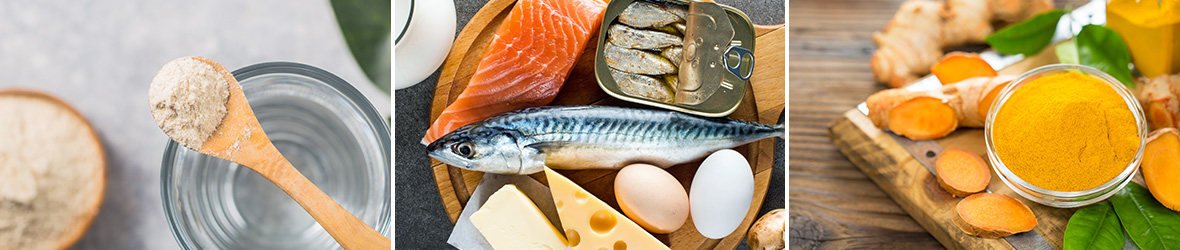


Article Summary
- This article reviews the evidence about beta-sitosterol, vitamin D, and curcumin
- Altogether, these ingredients can act synergistically to reduce BPH symptoms and improve the quality of life in these patients.
- They are safe and well-tolerated and can be adopted along with medical treatment and lifestyle changes for better results.
As we age, males increase the chance of having an enlarged prostate gland.
It is not the same as prostate cancer, and having a larger prostate does not mean you will have cancer.
But even if you don’t face cancer, BPH symptoms can be very uncomfortable.
Benign prostatic hyperplasia features lower urinary tract symptoms similar to a urinary infection. However, they also include obstructive symptoms that reduce the urine flow.
The stream is very weak, and voiding is often incomplete. In severe cases, this is very disturbing and reduces the patient’s quality of life.
There are plenty of natural prostate remedies to solve this type of problem. And plenty of natural ingredients are beneficial to treat the symptoms of an enlarged prostate. But it is always useful to search through the evidence before buying one.
In this article, you will find relevant information about three of these ingredients.
Beta-sitosterol, vitamin D, and curcumin are considered excellent sources of prostate health. After reading this piece, you will understand why and consider some valuable evidence to support their use in natural prostate remedies.
What is BPH?
BPH is the abbreviation of benign prostatic hyperplasia. It is a type of benign prostate enlargement, meaning that it is not associated with cancer.
The prostate tissue grows larger than usual, and the number of prostate cells increases. That is why it is called benign prostatic hyperplasia instead of hypertrophy.
An enlarged prostate wouldn’t be a problem by itself, but the gland surrounds the urethra. The natural opening where the urine is eliminated is then compressed with the gland. Thus, there’s an obstruction of your urine flow. That is why patients with BPH typically display urinary symptoms.
As the name implies, BPH is a benign condition, but some patients have a very large prostate and experience serious bladder problems, such as urinary retention. In such cases, their doctor may recommend surgical removal of the prostate gland.
[bensnaturalhealthIinlineLeadGen id =”1″]
Why choose natural remedies for your prostate problems?
Depending on your BPH symptoms, you may need one or another treatment. As noted above, doctors sometimes recommend surgical prostate removal. But we are talking about a massive prostate that compromises the patient’s quality of life. Most BPH patients do not reach that point and are okay with symptomatic treatment. This treatment is based on their symptoms and follow-up to ensure that everything is fine.
Prostate remedies stand as a helpful coadjuvant therapy to medical treatment. Patients have excellent results using a herbal remedy with drugs to relax the prostate.
Their BPH symptoms improve, and they recover their prostate health. They only have mild urinary symptoms in some cases, and prostate remedies and lifestyle changes can do the trick.
One of the reasons patients prefer natural remedies is that they are less likely to cause adverse events. In some cases, medical treatment may interact with other drugs, which is a common problem in seniors with chronic disease and polypharmacy.
How beta-sitosterol, vitamin D, and curcumin can help your prostate
Prostate remedies can be an option to increase the effectiveness of mainstream BPH treatment. Some are useful to treat BPH symptoms. Some would even shrink an enlarged prostate gland.
In any case of prostate enlargement, be sure to talk to your doctor about prostate remedies if you are considering them. You can be an excellent candidate for one or another, depending on the severity of your urinary symptoms and the medications you’re taking.
Also, before buying any herbal treatment for your prostate health, take some time to consider the ingredients. If it has beta-sitosterol, vitamin D, and curcumin listed, it will probably make a difference. Let us review each component and what they have in particular.
What is beta-sitosterol, and how does it help?
If there are prostate remedies with solid scientific evidence, they are beta-sitosterols. These substances are a type of phytosterol, a substance similar to cholesterol. But instead of raising blood cholesterol levels, they normalize serum lipids. Beta-sitosterols are known to improve urine flow and reduce BPH symptoms in the prostate.
The scientific evidence can’t be more convincing. It comes from one of the leading authorities in clinical trials, known as Cochrane. This journal reviews several studies in detail to assess the quality of evidence.
After going through four randomized clinical trials and more than 500 patients with benign prostatic hyperplasia, the researchers concluded that beta-sitosterols improve objective symptom scores and urine flow measures (1).
These supplements are not necessarily going to shrink an enlarged prostate. But more importantly, they act on the prostate tissue and urethra to reduce urinary symptoms.
What’s more, a recent review published in Bioorganic & Medicinal Chemistry Letters mentioned that the presence of beta-sitosterol in natural sources is maybe one of the reasons why vegans and vegetarians have a lower incidence of prostate cancer (2).
The benefits of vitamin D for your prostate
Some prostate remedies may also include vitamin D as the main ingredient, and there’s a reason for that. Vitamin D deficiency is prevalent in northern countries, especially during winter.
Seniors are at a higher risk because their metabolism changes and does not produce vitamin D in sunlight at the same rate. The same age group is at a higher risk of benign prostatic hyperplasia, too.
As expected, many observational studies showed that people with BPH also had low vitamin D levels. But are they two independent problems found in the same age group, or do they have a connection?
A recent study showed that worsened prostate health is related to even lower vitamin D levels. Patients with prostate cancer have lower vitamin D levels than patients with BPH (3).
Moreover, there is preclinical evidence and human studies that confirm the association. Healthy patients reduce their risk of an enlarged prostate by 18% when consuming vitamin D for prevention purposes.
Patients with BPH and urinary symptoms reduced their prostate volume by almost 3% after consuming vitamin D for ten months (3).
Everything points out that vitamin D is essential for the differentiation and growth of the prostate tissue and may reduce the burden of BPH symptoms in seniors.
Curcumin’s role in maintaining prostate health
Curcumin is another popular supplement for benign prostatic hyperplasia. This is a substance found in turmeric and is known for its anti-inflammatory potential. In the prostate tissue, curcumin reduces swelling and may even reduce PSA levels in some patients.
A recent systematic review of controlled clinical trials showed that patients reduced their urinary symptoms after taking curcumin supplements. Nocturia, weak urinary stream, increased frequency, urgency, the sensation of incomplete bladder emptying, and other BPH symptoms improve in these patients (4).
You could consume plenty of curcumin in Asian cuisine because it is a part of turmeric. But if you’re not used to eating this spice, a daily supplement can provide the full benefits. They have been tested over the years in pre-clinical trials and human studies alike.
Ben’s Total Health for The Prostate
The above benefits are precisely why we include clinically significant dosages of Beta-Sitosterol, Vitamin D, and Curcumin in our prostate supplements and .
Our natural prostate supplement, , contains 21 ingredients specifically designed to improve your urinary flow, reduce nighttime urination and help your sleep better, shrink your prostate, lower your PSA levels, and fight against prostate disease, without any side effects.
Clinical trials and meta-studies show the active ingredients in Total Health have a positive impact on prostate volume, improve lower urinary tract symptoms, and decrease the risk of acute urinary retention.
Conclusion
The prostate tissue in benign prostatic hyperplasia undergoes inflammation and accelerated growth. Many supplements have been postulated as prostate remedies to reduce BPH symptoms such as weak urine flow. Ideally, you should do short research to know which ingredients are more appropriate.
In this article, we have reviewed the evidence about beta-sitosterol, vitamin D, and curcumin. Beta-sitosterol is known to reduce the severity of urinary symptoms. Vitamin D can reduce BPH risk and may also shrink the prostate gland. Curcumin reduces inflammation, improves PSA levels, and helps regain prostate health.
Altogether, these ingredients can act synergistically to reduce BPH symptoms and improve the quality of life in these patients. They are safe and well-tolerated and can be adopted along with medical treatment and lifestyle changes for better results.
Explore More

This article is for informational purposes only and does not serve as medical advice. The details provided here are not a replacement for, and should never be depended upon as, professional medical advice. Always consult your physician regarding the potential risks and benefits of any treatment.
Our Medical Review Process
At Ben’s Natural Health, we are committed to maintaining the highest standards of accuracy, transparency, and scientific integrity. Every piece of content is carefully developed by medical professionals and undergoes a thorough review every 12 to 24 months. This ensures that our information remains current, reliable, and rooted in credible, evidence-based research. We reference only peer-reviewed studies from reputable medical journals, providing full citations and direct links to enhance trust and confidence.
Our Editorial Guidelines
For over 25 years, Ben’s Natural Health has been a trusted source of scientifically backed, reliable health information. Our editorial guidelines uphold the highest quality and integrity for every article we publish. Each piece is written by qualified experts and undergoes independent quality checks. We prioritize transparency by clearly displaying contributor credentials and biographies at the beginning of every article.
Medical Disclaimer
The content on this blog is for informational purposes only and should not be considered a substitute for professional medical advice, diagnosis, or treatment. While our articles are authored and reviewed by licensed medical professionals, they may not address your specific health concerns. Always consult a qualified healthcare provider before making any medical decisions.
Article Sources
- Wilt, T. J., Ishani, A., MacDonald, R., Stark, G., Mulrow, C. D., & Lau, J. (1999). Beta‐sitosterols for benign prostatic hyperplasia. Cochrane database of systematic reviews, (3). https://pubmed.ncbi.nlm.nih.gov/10796740/
- Lomenick, B., Shi, H., Huang, J., & Chen, C. (2015). Identification and characterization of β-sitosterol target proteins. Bioorganic & medicinal chemistry letters, 25(21), 4976-4979. https://pubmed.ncbi.nlm.nih.gov/25804720/
- Aytaç Şahin, M. D., Tuncay Toprak, M. D., Musab Ali Kutluhan, M. D., Ahmet Ürkmez, M. D., & Çağlar Yıldırım, A. V. M. (2019). Is Prostate Cancer Related to Low Vitamin D Level?. Bull Urooncol, 18, 113-116.
- Bagherniya, M., Askari, G., Alikiaii, B., Abbasi, S., Soleimani, D., Sathyapalan, T., … & Sahebkar, A. (2021). Curcumin for the treatment of prostate diseases: A systematic review of controlled clinical trials. Studies on Biomarkers and New Targets in Aging Research in Iran, 345-362. https://pubmed.ncbi.nlm.nih.gov/34331700/
Article Update History
Updated on 4 November, 2024 (Current Version)
Created on 17 April, 2022
Explore More

Doctor Answers: What are the Best Natural Flomax Alternatives?
If you're looking for natural substitutes for Flomax (Tamsulosin) to manage benign prostatic hyperplasia (BPH) without major side effects, you've come to the right ...