Exercises To Shrink The Prostate
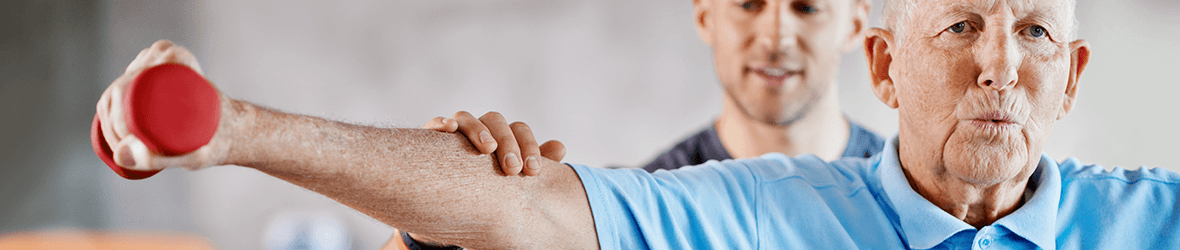


The size of the prostate gland is a determining factor in diagnosing problems such as benign prostatic hyperplasia or prostate cancer.
In around 90% of cases, there’s a correlation between prostate size and urinary symptoms.
All types of prostate enlargement cause very similar symptoms, almost all involving the urinary tract.
Hence, the concept of shrinking the prostate or reducing its size is very common.
But sometimes, you can have urinary symptoms with prostatitis and a preserved prostate size.
Technically, the prostate is only shrunk with a few strategies, such as radiation therapy. Some herbal supplements for prostate health can also have this effect.
But for practical purposes, we can list other alternatives that, while not reducing the prostate in size, do alleviate BPH symptoms.
They achieve this by relaxing the muscles surrounding the urethra or strengthening those of the pelvic floor.
In this article, we will review some prostate health exercises focused on relieving prostate enlargement symptoms.
Many of them are focused on pelvic floor strengthening, but you will also find other traditional exercise recommendations that can help improve your symptoms.
[bensnaturalhealthIinlineLeadGen id =”1″]
Exercises to shrink the prostate
Most exercises to shrink the prostate focus on the pelvic floor muscles. These muscles are located in the perineal area, from the pubic bone to the lower portion of the spine.
These muscles act as support for the bladder and the end of the colon. They help control urination and bowel emptying. They may also prevent or improve erectile dysfunction.
Kegels
The two exercises below are known as Kegels or Kegel exercises for prostate enlargement. They should be performed several times a day and can be alternated between fast and slow exercises at each person’s convenience.
These exercises will help improve bladder control and quality of life in prostate enlargement, in patients undergoing prostate treatment, and after prostate surgery for prostate cancer to prevent urinary incontinence.
However, remember that, like any other muscle, if you overdo the exercises for enlarged prostate, the muscles can tire instead of feeling strengthened.

Locating the pelvic floor muscles
Imagine you are urinating and, mid-flow, you squeeze the muscles to stop the urine stream. The muscles you are contracting are the pelvic muscles.
You can locate them better by doing the same exercise during the actual voiding by stopping the urine flow.
As you do the movements, you will feel the scrotum and the base of the penis move slightly. You can do this in front of a mirror to see when this happens.
Slow pelvic floor exercises
After locating the pelvic floor muscles, contract these muscles as hard as you can. Hold the contraction for 10 seconds. Then relax the muscles for 10 seconds.
Do this again to complete ten repetitions. If you can’t hold the contraction for 10 seconds, do it for as long as possible.
Quick pelvic floor exercises
After locating the pelvic floor muscles, contract these muscles as hard as you can, but only for 1 second.
Relax the muscles for 1 second and repeat the same action ten times.
If you have little time, this is a 15-second exercise to shrink the prostate, or rather, to treat prostate enlargement symptoms.
Yoga
Besides pelvic floor muscle training, another type of exercise that helps is yoga, especially some yoga poses that strengthen the pelvic floor muscles. These work as prostate exercises.
For example:
Cobbler’s pose
This pose is also known as the butterfly pose, bound angle pose, or baddha konasana. To do it, sit upright on the floor or cushion with your knees apart and your feet together.
If you feel knee pain, bring your feet together as much as possible. Press outward on the edge of your feet with your hands, uncovering the sole of the foot upward without separating them completely, as if you were opening a book.
Then stay upright and extend your trunk forward, trying to touch your feet to your chest, similar to the asana pose. Keep your spine straight as you return to the original position.
Reclining big toe pose
You begin the exercise lying on your back on your yoga mat. Bend your knee and bring it to your chest.
Hold it with your arms for a moment, and then use a belt, scarf, or elastic band to fold it around the foot’s arch.
Extend the knee in front of you and feel the stretch for a few seconds. As you do it, lift the other leg slightly off the floor and press the groin muscles.
Then return to the original position and repeat the same on the other side.
Traditional exercises
As we mentioned in the introduction, some traditional exercises can also help improve benign prostatic hyperplasia or prostate cancer symptoms.
Two types of exercises for prostate enlargement may also help in maintaining general fitness:
Aerobic exercise
Most aerobic exercises can help condition your cardiovascular system and improve urinary function.
For example, running, brisk walking, hiking, and swimming are ideal exercises for prostate health.
There are also prostate exercises to avoid, especially cycling. Prolonged time on the bike or cycling on a rocky surface can cause damage to the pelvic floor.
Thus, it is better to engage in other healthy prostate exercises instead.

Interval training
This type of exercise consists of rapidly alternating short periods of high-intensity exercise with short breaks.
By doing so, you can burn many calories quickly, which will help you maintain a healthy weight and indirectly contribute to prostate health.
Conclusion
The size of the prostate gland determines, in many cases, the symptoms of diseases such as benign prostatic hyperplasia and prostate cancer.
That is why exercises to shrink prostate tissue are pretty popular among prostate enlargement patients.
These exercises for prostate enlargement will strengthen the muscles around the urinary tract, improve voiding control, and improve blood flow to the prostate and pelvis in general.
Three exercises will help in this area: Kegels, some yoga poses, and some aerobic exercises.
Kegels are enlarged prostate exercises targeting the pelvic floor muscles that consist of contracting and relaxing these muscles in intervals and repeating the exercise several times a day.
The most helpful yoga poses are the cobbler’s and reclining big toe poses.
And among the main aerobic exercises recommended are walking, hiking, swimming, and interval training.
Explore More

This article is for informational purposes only and does not serve as medical advice. The details provided here are not a replacement for, and should never be depended upon as, professional medical advice. Always consult your physician regarding the potential risks and benefits of any treatment.
Our Medical Review Process
At Ben’s Natural Health, we are committed to maintaining the highest standards of accuracy, transparency, and scientific integrity. Every piece of content is carefully developed by medical professionals and undergoes a thorough review every 12 to 24 months. This ensures that our information remains current, reliable, and rooted in credible, evidence-based research. We reference only peer-reviewed studies from reputable medical journals, providing full citations and direct links to enhance trust and confidence.
Our Editorial Guidelines
For over 25 years, Ben’s Natural Health has been a trusted source of scientifically backed, reliable health information. Our editorial guidelines uphold the highest quality and integrity for every article we publish. Each piece is written by qualified experts and undergoes independent quality checks. We prioritize transparency by clearly displaying contributor credentials and biographies at the beginning of every article.
Medical Disclaimer
The content on this blog is for informational purposes only and should not be considered a substitute for professional medical advice, diagnosis, or treatment. While our articles are authored and reviewed by licensed medical professionals, they may not address your specific health concerns. Always consult a qualified healthcare provider before making any medical decisions.
Article Sources
- Rosier, P. F. W. M., & De La Rosette, J. J. M. C. H. (1995). Is there a correlation between prostate size and bladder-outlet obstruction? World Journal of Urology, 13, 9-13.
- Chitre, A., & Kulkarni, J. N. (2022). Effect of early pelvic floor muscle exercises (Kegel’s) after Robotic Prostatectomy in Prostate cancer patients. Journal of Robotic Surgery, 1-6.
Article Update History
Created on 19 June, 2023
Explore More

Exercise Guide During Prostate Cancer Treatment
The benefits of exercise and its value in maintaining good health are something health professionals profess. Studies indicate that physical activity is generally safe, ...