Recipe: Salmon with Stir-Fried Vegetables


Article Summary
- This salmon with stir-fried vegetables recipe is designed to be included in a keto diet to improve prostate health.
- Keep reading to learn how to make it.
The prostate is a gland that is an integral part of the male anatomy.
It has several purposes, including its role in reproductive health.
We recommend the keto diet for prostate health and overall general health.
This recipe is designed to be included in a keto diet and contains foods that are beneficial for the prostate.
Asian Salmon with Stir-Fried Vegetables Recipe
Salmon Ingredients and Measurements
3 oz Salmon Fillet
1/2 Bell Pepper (any color)
1 cup broccoli
1 tablespoon Braggs Amino
1/2 teaspoon of garlic
1 teaspoon Cayenne Pepper
1 teaspoon sesame seeds
8 oz brewed green tea
1 tablespoon Olive oil
Side Dish Ingredients and Measurements
1/2 cup each of blueberries & raspberries
2 Brazil nuts – Chopped
How To Make This Keto Recipe: Step-By-Step Guide
Step 1: Marinate the salmon in 8 oz of green tea overnight.
Step 2: Pat salmon dry the next day. Set oven to broil (average temperature 500 F).
Step 3: Mix Braggs Amino, Olive Oil, and Cayenne pepper together in a small bowl.
Step 4: Brush salmon in the Braggs Amino’s and 1 tbsp olive oil mixture. Save leftovers for vegetables.
Step 5: Broil salmon, skin down for 9 minutes.
Step 6: Slice bell peppers into slices and break the broccoli into bite-size pieces. While the salmon is cooking, saute the vegetables and garlic in the remaining olive oil and Aminos. Saute on medium heat until vegetables are al dente.
Step 7: Wash berries, and chop Brazil nuts into small pieces. Gently toss together. Set aside.
Step 8: Remove the salmon from the oven. Garnish vegetables and salmon with sesame seeds.
Step 9: Serve with sauteed vegetables and berries.
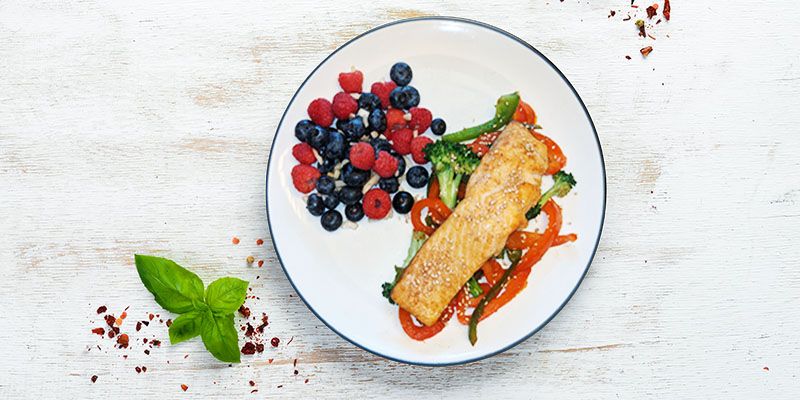
Calories: 547 kcal. Total Fat 32 g. Sodium 231 mg. Fiber 15 g.
Healthy eating for the prostate
Dietitians and researchers promote an overall healthy eating plan for prostate health which encompasses the following.
- Eating various fruits and vegetables: The brighter, the better, aim to eat a rainbow. This will provide a myriad of cancer-preventing antioxidants and phytochemicals. Foods particularly helpful include tomatoes, berries, red peppers, and broccoli.
- Make your diet rich in healthy fats: include healthy fats, such as avocado, olive oil, fatty fish, nuts.
- Portioning: Be mindful of the portions served and eat at a slow pace, so your body recognizes satiation.
Certain foods can cause inflammation in the body. Limiting these particular items will protect the prostate. Limit the following: Red meats, processed foods, sweetened things like beverages, and refined white carbohydrates like bread and crackers.
Explore More Keto Recipes
This article is for informational purposes only and does not serve as medical advice. The details provided here are not a replacement for, and should never be depended upon as, professional medical advice. Always consult your physician regarding the potential risks and benefits of any treatment.
Our Medical Review Process
At Ben’s Natural Health, we are committed to maintaining the highest standards of accuracy, transparency, and scientific integrity. Every piece of content is carefully developed by medical professionals and undergoes a thorough review every 12 to 24 months. This ensures that our information remains current, reliable, and rooted in credible, evidence-based research. We reference only peer-reviewed studies from reputable medical journals, providing full citations and direct links to enhance trust and confidence.
Our Editorial Guidelines
For over 25 years, Ben’s Natural Health has been a trusted source of scientifically backed, reliable health information. Our editorial guidelines uphold the highest quality and integrity for every article we publish. Each piece is written by qualified experts and undergoes independent quality checks. We prioritize transparency by clearly displaying contributor credentials and biographies at the beginning of every article.
Medical Disclaimer
The content on this blog is for informational purposes only and should not be considered a substitute for professional medical advice, diagnosis, or treatment. While our articles are authored and reviewed by licensed medical professionals, they may not address your specific health concerns. Always consult a qualified healthcare provider before making any medical decisions.
Article Update History
Updated on 7 June, 2022 (Current Version)
Created on 13 December, 2021
Explore More

Candida Diet: Foods To Eat and Avoid With A Yeast Infection
A yeast infection occurs when the yeast (fungus) Candida albicans becomes overgrown, which leads to uncomfortable symptoms like genital itching, burning while peeing or ...