Easy Diabetes Recipe: Greek Chicken Salad In A Jar



Having diabetes doesn’t mean you need to cook boring and flavorless meals.
It just means you need to have a little creativity on how to select the right ingredients that won’t spike your glucose levels.
Finding an easy diabetes recipe that won’t take a lot of time in the kitchen can be the best way to ensure you have correct glucose management.
Nonetheless, who has time to search and modify recipes to ensure they are appropriate for someone with diabetes?
The good news is that as a Registered Dietitian and Certified Diabetes Educator, I know what it takes to create a healthy meal.
On top of that, I love cooking! So I know how to create delicious and healthy meals.
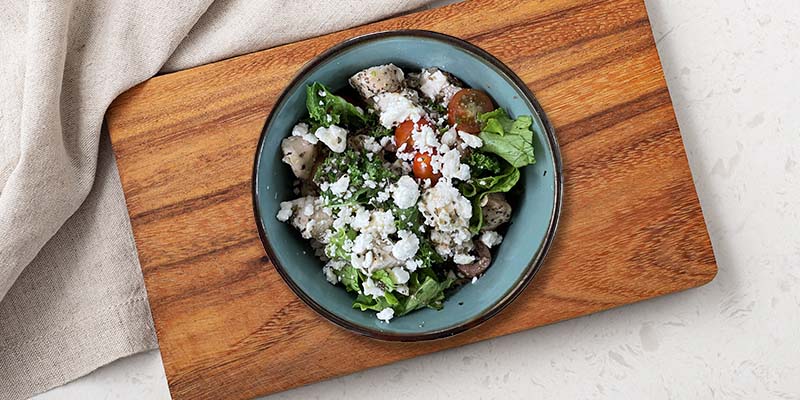
Here, you’ll find a tasty Greek Chicken Salad in a jar.
Not only will you love the delicious flavors and textures it provides, but it will also provide stable blood glucose levels. Plus, you can make them two to three days in advance, saving you a lot of time in the kitchen.
Ingredients For The Greek Chicken Salad
Greek Dressing
- ¼ cup of red wine vinegar
- 2 cloves of garlic minced
- 3 tablespoons virgin olive oil or extra virgin olive oil
- ½ teaspoon dried oregano
- 1 teaspoon Dijon mustard
Greek Chicken Salad
- 2 tablespoons Greek dressing
- ½ cup diced tomatoes
- ¼ cup diced cucumbers
- ½ cup cooked chickpeas
- 1 tablespoon of diced onions
- 3 oz of cooked chicken breast
- 2 tablespoons chopped kalamata olives
- 2 tablespoons crumbled feta cheese
- 1 cup chopped romaine lettuce
- ½ cup chopped kale
Step-By-Step-Guide To Make This Easy Diabetes Recipe
- Grab a Mason jar (at least 16 oz).
- Place the dressing at the bottom.
- Start making the layers in the following order: tomatoes, cucumbers, chickpeas, onions, chicken breast, kalamata olives, feta cheese, romaine lettuce, and kale.
- Store it in the fridge for up to 2-3 days, or eat it straight away.
- When you are ready to eat the salad, pour it into a bowl and mix thoroughly.
Nutritional Information
| Calories | 466 |
| Carbs | 31.0 grams |
| Fiber | 8.6 grams |
| Net carbs | 22.4 grams |
| Protein | 37.9 grams |
| Fats | 22.1 grams |
Other Tips and Possible Alternatives
If you don’t like chickpeas, you can switch them for another legume. You can use quinoa, lentils, or even legume pasta.
Just make sure you replace it with a carb high in fiber and protein, such as the ones previously mentioned, to prevent your glucose levels from spiking.
For those who want to try a plant-based approach, you can replace the chicken with tofu. Tofu provides all the essential amino acids you need, giving you a high-quality protein just like chicken.
Instead of kale, you can also replace it with spinach. They are both high in nutrients, making them an excellent choice to add if you want to increase the dish’s nutritional value.
Conclusion
Making meals in jars can save you a lot of time in the kitchen. They are easy, diabetes-friendly recipes you can create in advance, which you can leave for a couple of days in the kitchen.
That way, you don’t have to worry about what you are going to have. You simply grab the jar, and off you go!
Remember that you can make changes in the recipe with similar ingredients. For example, replace a legume with another legume.
But what you cannot do is replace a legume with a simple carb. Simple carbs are lower in nutrients and fiber, which can affect your overall glucose management.
Explore More
Diabetes-Friendly Crock Pot Recipe: Turkey Bolognese Spaghetti Squash Noodles.
This article is for informational purposes only and does not serve as medical advice. The details provided here are not a replacement for, and should never be depended upon as, professional medical advice. Always consult your physician regarding the potential risks and benefits of any treatment.
Our Medical Review Process
At Ben’s Natural Health, we are committed to maintaining the highest standards of accuracy, transparency, and scientific integrity. Every piece of content is carefully developed by medical professionals and undergoes a thorough review every 12 to 24 months. This ensures that our information remains current, reliable, and rooted in credible, evidence-based research. We reference only peer-reviewed studies from reputable medical journals, providing full citations and direct links to enhance trust and confidence.
Our Editorial Guidelines
For over 25 years, Ben’s Natural Health has been a trusted source of scientifically backed, reliable health information. Our editorial guidelines uphold the highest quality and integrity for every article we publish. Each piece is written by qualified experts and undergoes independent quality checks. We prioritize transparency by clearly displaying contributor credentials and biographies at the beginning of every article.
Medical Disclaimer
The content on this blog is for informational purposes only and should not be considered a substitute for professional medical advice, diagnosis, or treatment. While our articles are authored and reviewed by licensed medical professionals, they may not address your specific health concerns. Always consult a qualified healthcare provider before making any medical decisions.
Article Update History
Updated on 5 April, 2026 (Current Version)
Created on 20 July, 2023
Explore More
Is Cheese Good For Diabetics? Benefits, Carbs, Risks
If you’re a diabetic, you may wonder whether cheese is good for you. After all, how many carbs are in cheese? And does cheese ...